
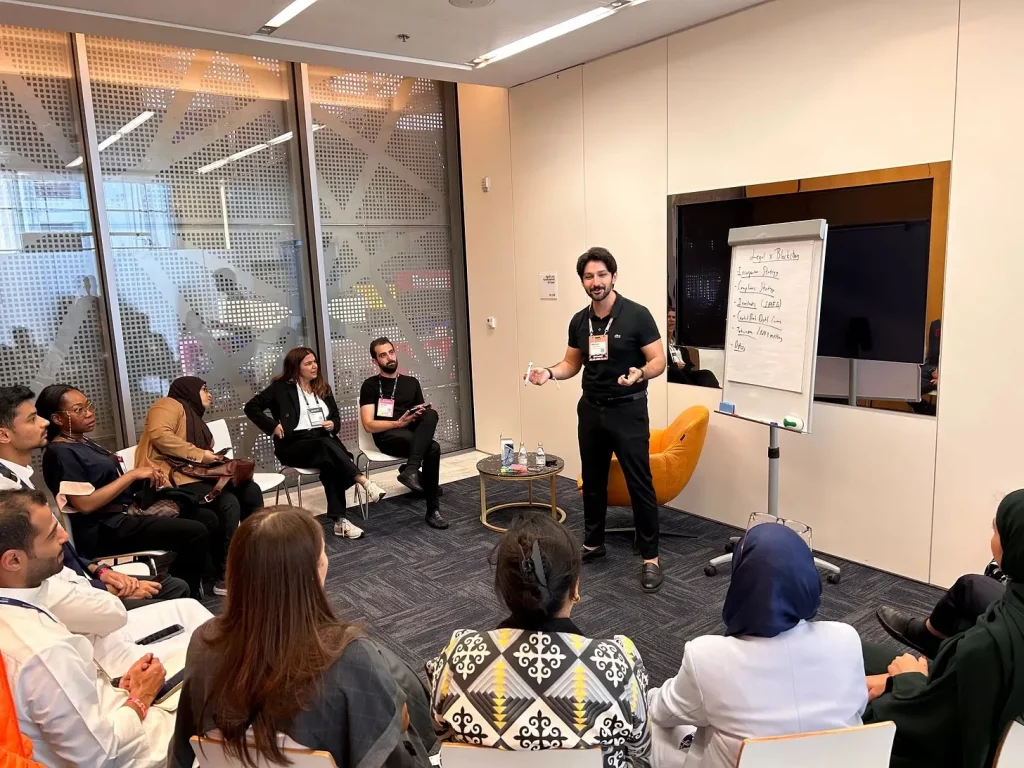
In June 2024, a closed workshop organized and hosted by our Managing Partner Erdem Mümtaz Hacıpaşaoğlu in Doha as part of the Qatar Websummit brought together leading minds from the blockchain and crypto industries. The workshop offered an in-depth, closed-door discussion on the current and emerging trends across crypto regulation; the agenda was shaped around the framework Mümtaz prepared for the session.
The central thesis of the discussions was clear: Web3 is an industry that does not fit into a single jurisdiction, continues to evolve at speed, and is searching for a new equilibrium with regulators; the topics that will shape that balance in 2024 and beyond span a wide spectrum: from incorporation strategy to CBDCs, from RWA tokenization to offshore structuring.
Incorporation strategy
Setting up a blockchain company requires navigating regulatory environments that differ meaningfully from jurisdiction to jurisdiction. The workshop emphasized how decisive the right jurisdiction choice is in aligning business objectives with regulatory requirements. Among the most popular jurisdictions for blockchain companies, Switzerland, Singapore and Estonia stand out for their favorable regulatory environments, well-built legal frameworks and supportive government policies; the U.S. is also a common choice for non-security token projects, given its established legal system and powerful infrastructure. Companies need to weigh tax incentives, regulatory clarity and access to financial services together.
Compliance: AML, KYC and cybercrime
As regulators tighten their oversight of the sector, compliance has become a critical priority for blockchain companies. The workshop emphasized that adherence to AML and KYC regulations, transparency and disciplined record-keeping practices are the foundational components of a comprehensive compliance strategy; advanced technologies such as AI and blockchain analytics are increasingly being deployed to streamline compliance processes. In parallel, cybercrime risk is rising: strong cybersecurity controls, regular audits and user education were discussed as the core tools for mitigating these risks.
Capital instruments: SAFE and SAFT
In crypto fundraising, SAFE (Simple Agreement for Future Equity) and SAFT (Simple Agreement for Future Tokens) have emerged as two widely used instruments; the workshop examined the suitability and legal nuances of each across different project types. SAFE offers a flexible and straightforward path for equity-based financing rounds, while SAFT provides a dedicated framework for token sales: a legal structure for pre-selling tokens to be issued once the network is live. The recent practice of pairing SAFE with token warrants introduces an additional layer of complexity and utility; understanding the regulatory implications and structuring documentation correctly are the keys to using these instruments effectively.
CBDCs, tokenization, NFT minting and DAOs
Central Bank Digital Currencies (CBDCs) are gaining momentum as digital alternatives to traditional fiat; potential benefits like financial inclusion, improved payment systems and stronger regulatory control were discussed, alongside concerns about privacy, security and the impact on existing financial institutions. Tokenization and NFT minting enable the on-chain representation of physical or digital assets and the creation of a new asset class; these processes require clear legal frameworks around intellectual property rights, investor protection and market stability. DAOs, as a new organizational form governed by smart contracts, face divergent legal treatment across jurisdictions; clarity around legal personhood, liability and governance standards is critical for broader adoption.
Real world asset (RWA) tokenization
One of the most bullish themes of the workshop was real world asset (RWA) tokenization: creating digital representations of physical assets on the blockchain unlocks fractional ownership and carries the potential to improve liquidity in markets such as real estate, art and commodities. Resolving the legal uncertainties around property rights, valuation and transferability, and establishing clear frameworks and industry standards: was discussed as the precondition for unlocking the full potential of this trend.
Offshore structures and emerging jurisdictions
Offshore incorporations: particularly the Cayman Islands, BVI, Gibraltar and Seychelles: offer blockchain companies tax advantages, regulatory flexibility and access to international markets; however, compliance with international regulations and reputational risk are parameters that must be managed carefully. The workshop also examined the rise of Dubai, Qatar, Palau and Saint Vincent & The Grenadines as crypto-friendly destinations: Dubai and Qatar’s investments in infrastructure and regulatory clarity are positioning them as global hubs, while Palau and SVG offer attractive conditions for blockchain startups through their flexible regulatory environments.
Highlights from this issue
- Incorporation: Profiles of Switzerland, Singapore, Estonia and the U.S.
- Compliance: AML/KYC, blockchain analytics and cybercrime defense
- Capital: SAFE and SAFT, paired with token warrants
- CBDCs, tokenization, DAOs: The emergence of new legal categories
- RWA tokenization: Liquidity and fractional ownership opportunity
- Emerging jurisdictions: Dubai, Qatar, Palau, SVG
For the keynote Mümtaz delivered during the same week at Web Summit Qatar and the other stages he took part in, see our related piece.
You can read the original Substack publication at Understanding Web3 Legal Implications: Issue 12.
Author

More from Vircon Insights
Legal Aspects of Web3 Nowadays: DeGameFi Tbilisi Panel
August 7, 2024Web Summit Qatar 2024 Keynote: Clemta's SaaS Transformation and Blockchain Legal Infrastructure
February 29, 2024Pioneering Startups Shaping the Future of Web3 in Türkiye: Webrazzi Fintech 2024
December 11, 2024Building the Future by Binance TR at Webrazzi Fintech 2025
December 10, 2025Doing Business in USA: YTILI Alumni Board Panel
September 3, 2025Fintelogy Crypto-Asset Law and Compliance Management Certificate Program
March 20, 2025Related Practice Areas
ICOs, Crypto & Blockchain
Crypto-asset regulation, token offerings, exchange and custody licensing.
View service →Startup Law
Incorporation, founder agreements, ESOP, term sheets, regulatory matters.
View service →US Company Formations & Flip-Ups
Delaware C-Corp, flip-up structures, SAFE/convertible notes, 83(b).
View service →