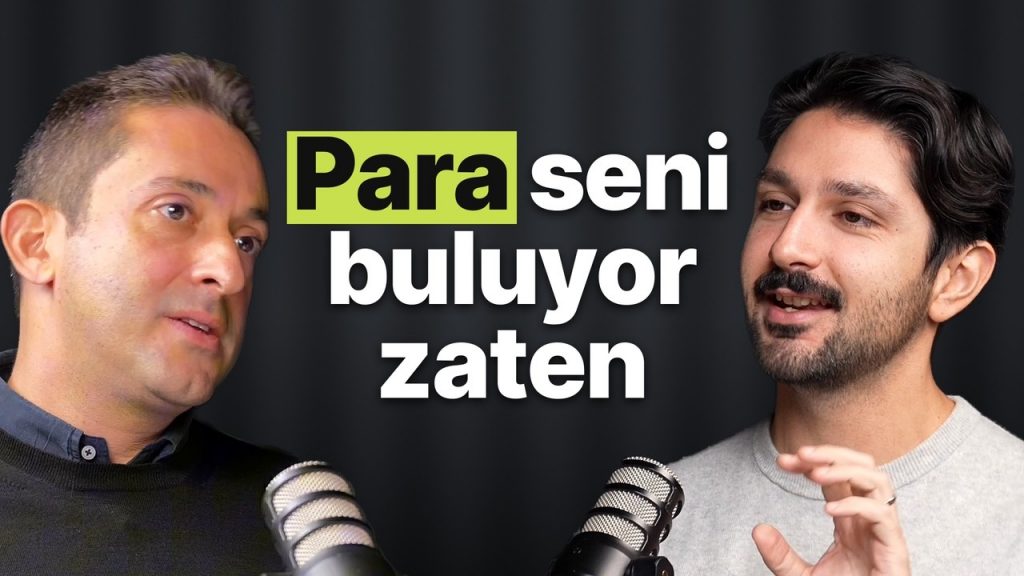
In episode 96 of Çıtayı Yükseltenler, our guest is Can Bakır, CEO of İş Bankası’s Yapay Zeka Fabrikası (AI Factory). We talked about a career that ran from startups to a corporate, how a 100-year-old bank invests in AI startups, the unicorn they missed because they could not get a meeting within 30 days, and what he means by “money is a result”. The episode is in Turkish. It is hosted by Hüseyin Oğuz of Opus Partners and Erdem Mümtaz Hacıpaşaoğlu, Managing Partner of Vircon Legal.
Who is Can Bakır? From startups to a corporate
After Brown and a few years in New York, Can Bakır returned to Türkiye. He joined Euro.message during its growth, and the company was sold to Doğuş Group. Peak Games followed, then his own startup: a second-hand ticket site that, once the team saw how small that market was, turned into live streaming of events and ended with Ticketmaster taking over the business. He then ran the media group at Mynet and, at Arçelik, built a unit that went from new business development to a venture studio. In his words, most people move from corporates to startups, and he did the opposite. He also explains why founding a company is a roller coaster, swinging within a single day between “glad we did this” and “what did we get into”.
An AI factory inside a bank
Yapay Zeka Fabrikası was set up in February 2023, shortly after ChatGPT launched. As Can Bakır tells it, the first aim was to support the ecosystem; an investment arm followed as more startups came through. Today it runs as an accelerator and a fund, and also operates İş Bankası’s Workup programme, Anadolu Sigorta’s Allstart programme and TÜSİAD’s SD² programme. He says their database holds more than 3,000 startups founded by Turkish founders, and that they are sector-agnostic and back Turkish founders wherever they are based.
What they look for across 35 AI investments
They have invested in 35 startups so far, and 60 startups are in the accelerator. The thesis has moved: early on they wanted to see a chief science officer in the team or an academic on the advisory board. With models converging, they now look more at how fast a team ships and how fast it reaches customers, and keep academics involved for mentoring and technical review. They invest up to USD 500,000 per startup and, by Can Bakır’s estimate, do not lead in about 95% of the rounds they join.
A note from the legal side: a non-lead investor usually signs on to the documents the lead negotiated. Extra rights a corporate investor asks for (information rights, a right of first refusal, or limits on dealings with competitors) often come in a separate side letter, and founders should check early how they affect later rounds and a possible sale. See Corporate venture capital from a family company: what to watch.
Everyone now has the strength of ten
We discuss a period in which much smaller teams can create far more value. Can Bakır sees solo founding as an aspiration but does not recommend it: given the emotional load of building a company, he says a co-founder to work shoulder to shoulder with matters regardless of productivity gains. We then talk about whether 60,000-person companies will last and whether AI destroys jobs or grows the market; Hüseyin brings up the Jevons paradox, the idea that demand for something rises as it gets cheaper.
The smaller the team, the more the arrangement between co-founders matters. How shares vest, what happens if a founder leaves and how decisions are made should be in writing before investors arrive. See Founder vesting in a Turkish joint-stock company.
The riskiest step in the safest institution
We ask how a bank built on risk management sits alongside venture capital. Can Bakır explains that the unit was set up outside the bank as a subsidiary, with an investment committee of five people from technology backgrounds. He describes a meeting where he pitched an idea-stage venture to executives fresh from budget presentations, the value of putting senior managers through angel investor training, and a spin-off negotiation over the parent’s stake, which went from a proposed 100% to 80% and then to 50%.
In a spin-off from a corporate, the equity split is only one part. The transfer of intellectual property to the new company, the services relationship with the parent and the team’s shares or option plan should be settled in the same documents. Under Turkish law a demerger is also an option. See Partial demerger, spin-off and simplified merger (TCC Art. 159).
The one that got away
Can Bakır recalls an investment opportunity that arrived before the internal process was in place: they had 30 days to say yes or no, and could not even get a meeting in that time. The company later became a unicorn. After that, they set up a process and a team to answer a similar opportunity within a week. We talk about how no answer means “no” and how a fast no also helps a founder. He advises founders to focus on the lead investor, since smaller investors mostly follow the lead.
Why money finds you
This is where the episode’s title comes from: “Money is really a result. If you are building something, money finds you.” In Can Bakır’s view, investors today try to persuade good startups to take their money. Where a round used to plan for two or three years of runway, startups now raise almost every year, and debt and revenue-based financing are on the table too. That is why he values keeping the relationship with an investor who passes on a round, so the investor can get to know the founder over time.
Financing between rounds (a bridge, convertible instruments or debt) closes quickly but shapes the cap table at the next round. Discounts, valuation caps and the security and prepayment terms of debt should be read against the next round’s scenario before signing. See Bridge financing: convertible notes and KISS and Venture debt for a Turkish startup: what to read.
One magic wand for the ecosystem
By Can Bakır’s estimate there are close to 700 active funds in Türkiye, but their capital is thin; he calls the budget gap with funds abroad “an unequal match” and would point the wand there. On their side, he says they have raised ticket sizes above USD 100,000. The episode closes with quick questions: he expects Türkiye’s most valuable AI company in 2030 to come from health, sees the models themselves as the most overhyped part, thinks entertainment, sports and culture are overlooked, and names resilience and creativity as Turkish founders’ strongest traits and self-confidence as the weakest. He suggests opening a pitch with validation if you have it, and the book he would give everyone is Karen Hao’s Empire of AI.
Three practical takeaways
- Focus on the lead investor: smaller investors mostly follow the lead; read extra rights and side letters together with the rest of the round.
- Treat silence as an answer, but keep the relationship: an investor who passes today may be at the table in the next round.
- Read interim financing against the next round: bridges and debt close quickly, and their effect shows up in the next cap table.
Watch the full episode (in Turkish) on YouTube. For more of our writing, see Insights.
Frequently asked questions
What is İş Bankası’s Yapay Zeka Fabrikası?
As Can Bakır describes it in the episode, a unit İş Bankası set up in February 2023 that invests in AI startups and runs accelerator programmes. At the time of recording it had invested in 35 startups and had 60 startups in its accelerator.
Who are the guest and hosts?
Can Bakır, CEO of İş Bankası’s Yapay Zeka Fabrikası; the hosts are Hüseyin Oğuz (Opus Partners) and Erdem Mümtaz Hacıpaşaoğlu (Vircon Legal).
What is Çıtayı Yükseltenler?
A podcast about the journeys of scaling startups in Türkiye. Most episodes are in Turkish. To hear about new episodes, subscribe to the YouTube channel.
Source. Çıtayı Yükseltenler, Can Bakır episode, YouTube. Figures and organisational details are as the guest described them in the episode.
This article is general information and not legal advice.