
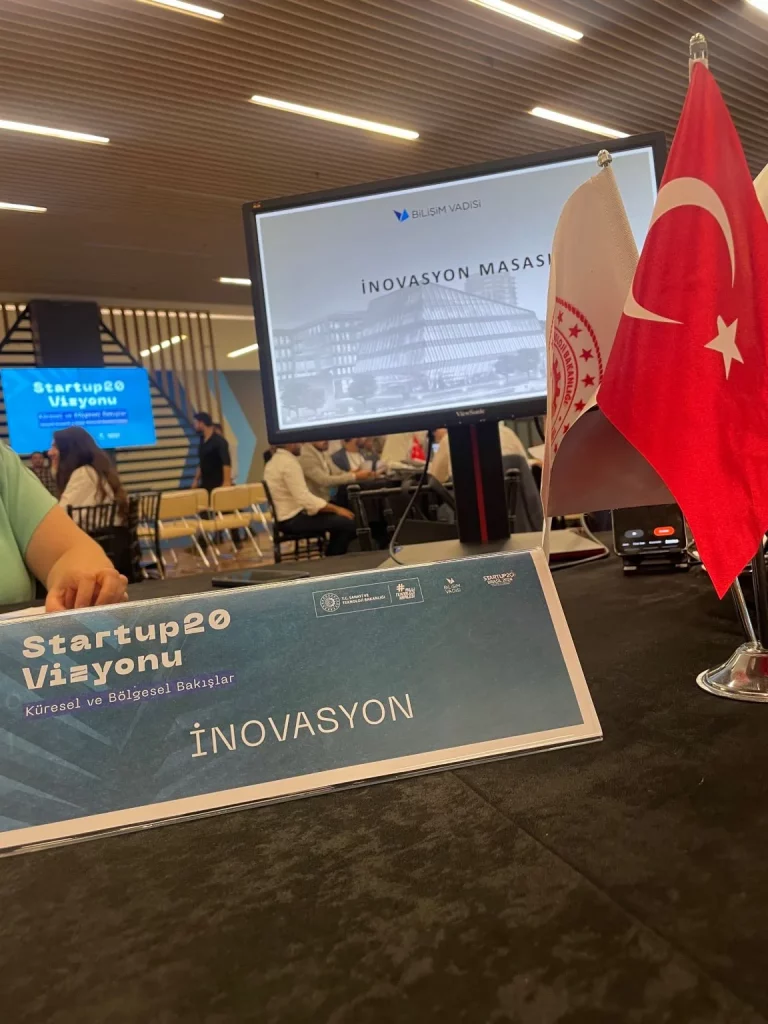
On July 25, 2024, our Managing Partner Erdem Mümtaz Hacıpaşaoğlu represented Turkey at the Innovation Table of Startup20, the startup track of G20. Among the priorities brought to the table on Turkey’s positioning in global startup policy were integrating startup-law mechanics into Turkish law and establishing a dedicated legal regime for startups.
The central thesis of the table was clear: for Turkey to increase its weight in the global startup ecosystem, the structure built on classical company law must give way to a legal architecture where startup-specific mechanics: founders’ agreements, vesting, SAFE, employee option plans: are codified at the statute level, alongside a tailored tax-employment-investment regime for startups.
Mechanics proposed for adoption into Turkish law
The Innovation Table proposed turning what are today indirectly structured under freedom of contract: founders’ vesting, IP transfer, employee option plans (ESOP/PSU), SAFE and convertible note instruments: into directly recognized legal categories.
A dedicated regime for startups
The proposed regime was framed around one-stop incorporation, tax exemption thresholds, an income-tax regime dedicated to employee option plans, investor-side incentives, and specialized dispute-resolution mechanisms.
Turkey’s positioning within G20
The proposals Turkey put forward within the Startup20 framework aim to contribute to the codification of global startup policy along a “national-level special regimes” approach.
Highlights from this table
- Mechanics: Definitions of vesting, SAFE, ESOP, IP transfer
- Special regime: Incorporation, tax, option plans, incentives
- Position: Turkey’s policy proposal in the G20 perspective
You can read Mümtaz’s LinkedIn post at this link.
Author

More from Vircon Insights
SAFE & Convertible Instruments at APY TEKMER HUB Investment Program (Week 5)
July 10, 2026Your Server Is in Turkey, Your Customer Is in Europe: How the EU AI Act Binds a Turkish Startup
July 10, 2026The Token Is Easy, the Law Is Hard: Real-World Asset Tokenization (RWA) and Turkey
July 9, 2026What You Think Is "Just a Payment Feature" May Be a Loan: The Law of BNPL in Turkey
July 8, 2026TCC Article 376 for a Cash-Burning Startup: Capital Loss, Over-Indebtedness and the Board's Three Thresholds
October 1, 2026The Departing Founder's Shares: Structuring Good Leaver / Bad Leaver under Turkish Law
September 16, 2026Related Practice Areas
Startup Law
Incorporation, founder agreements, ESOP, term sheets, regulatory matters.
View service →Employment Law
Employment contracts, ESOP, termination, non-compete, work permits.
View service →US Company Formations & Flip-Ups
Delaware C-Corp, flip-up structures, SAFE/convertible notes, 83(b).
View service →